|
|
{BANNER_STUFF}
KwaZulu-Natal's Bread Basket
The Richmond Municipality is situated in one of the most beautiful parts of the country and is predominantly rural. It is in these rural areas where the majority of its population resides.
The main challenges faced by the Richmond Municipality relate to economic infrastructure, socio-economic, spatial and housing issues as well as issues relative to socio facilities and services and sustainable infrastructure.
Economy
The Municipality is well situated on major routes to the key development nodes of Durban and Pietermaritzburg, has a high agricultural potential, and already has a number of manufacturing and production facilities in Richmond, some of these catering for the export market. At present, agricultural activity contributes more than 50% in terms of gross geographic product and employment to Richmond's economy. However, other opportunities in the tourism, manufacturing, commercial sectors have yet to be developed.
Agriculture
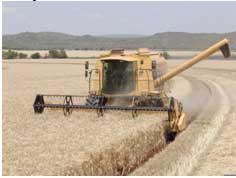
The mild climate with good soils and adequate rainfall contribute to Richmond being regarded as the fruit and vegetable basket of the Province, as virtually every fruit and vegetable imaginable is grown in the area. The main agricultural activities are the cultivation of timber, sugar-cane, tea, citrus, peaches, maize and market vegetables, dairy, poultry, pig and cattle farming, and game farming.
Tourism
The Municipality also intends to expand its tourism potential, building on the well-established tourist market in Durban and the Midlands. Among the many projects planned are tourism training programmes and the development of the Richmond Museum, festivals and so on.
Historical & Other Places of Interest
The town of Richmond owes its establishment to the arrival of the Byrne Settlers from the British Isles in 1850. They came with virtually nothing, having lost most of their possessions when their ship, the Minerva, sank in a storm in Durban Bay. They lived in tents until they had built sod or wattle-and-daub huts, and later constructed houses using bricks and shale. Their early struggles and the homes, implements and furniture they made are recorded in the Richmond-Byrne and District Museum. The Old Court House, known as Heritage House, is the home of the Richmond Publicity Association Office. Teas, crafts, gifts and home products are available, and a number of entrepreneurs now occupy the former prison cells and blockhouse.
Blarney Cottage in Richmond is thought to be the last unaltered settler home in the area. Family names are scratched into the bricks. It is a National Monument, as is Carnarvon Masonic Lodge, built for the freemasons in 1884.
Burial site of the 12 rebels of the Bambata Rebellion; the Muslim Madressa Mosque; the site of the Herbert and Cecil J Rhodes cotton farm in the Inhlavini Valley; and the Agricultural Hall, dated 1889.
The Beaulieu Dam on the way to Byrne is a popular holiday destination, providing fishing and picnic sites. There are hiking and riding trails between Baynesfield and a number of privately owned game and nature reserves. The Richmond Country Club has a wide range of sports facilities, and in the town of Richmond there is a Combined Sports Club, including the oldest Lawn Tennis Club in South Africa.
The Municipality also offers a good hotel, numerous bed and breakfast establishments, and town and country restaurants. A number of home crafts, including woodwork, carving, angora garments, painting, pottery and children's clothes are available for sale, and there is an open market for ethnic craftwork.
There are several upmarket game ranches in the area, which cater for white water rafting and canoeing, rock climbing, abseiling, hang gliding and excellent fresh water fishing.
Highover Nature Reserve is a privately owned nature reserve and natural heritage site.
dwardo@iafrica.co.za
www.highover.co.za
The rural areas of Inhlazuka and Hella Hella should be developed into prime tourist attractions because of their beauty.
Vision
Through innovation and dedication, the Richmond Municipality will provide its citizens with access to physical, social and economic development opportunities in a safe and secure environment.
Location of Head Office: Richmond is 44 km south of Pietermaritzburg (R56)
Municipal Area (km2): 1 232.09
Richmond was named after an estate of the Duke of Buccleuch in England
Richmond Municipality forms part of the uMgungundlovu District Municipality
Towns within the municipal boundaries: Hopewell, KwaCebelele, KwaMagoda, Ndaleni, Richmond, Rosebank, Simozomeni
Key Personnel
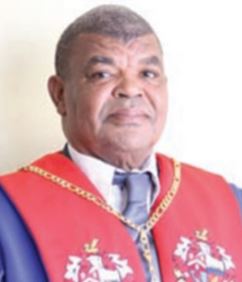
Mayor: Mr Sibusiso Joseph Mchunu
Other Members of Council: Ms Thandazile V Phoswa (Deputy Mayor), Mr Siminenkosi B Ndlovu (Speaker), Ms Ntombizonke P Phoswa (Chief Whip), Mr Thembokwakhe G Madondo (Exco), Mr Sifiso J Mkhize, Mr Msawakhe J Jili (Chairperson: MPAC), Mr Shakes L Shange, Mr Bonginkosi B Ngcongo, Mr Bonginkosi R Shange, Mr Vincent Maphumulo, Mr Sibongiseni Ngcobo, Mrs Khonziwe E Mkhize, Ms Nomfundo W Mjwara, Mr Sibusiso J Mchunu (LED)
Administrative Management
Municipal Manager: Mr Edward Sibusiso Sithole
Chief Financial Officer: Sanjay Mewalall
Communications Officer: Sibonelo Bhengu
LED Officer: Ms Antionette Whyte
Other Senior Management: Sikhombiso Mthembu (Strategic Manager: Corporate Services), Bigboy Mhlongo (Strategic Manager: Community Services)
Postal Address
Private Bag X1028
Richmond
Postal Code: 3780
Physical Address
57 Shepstone Street
Richmond
Tel Number: +27 (33)212 2155
Fax Number: +27 (33) 212 2102
E-mail: mayorsoffice@mweb.co.za
Website: www.richmond.gov.za
Tourism Office
Richmond / Byrne Community Tourism Organisation,
G Manton,
PO Box 196,
Richmond,
3780,
Heritage House,
Shepstone Street,
Richmond.
Tel:+27 (33) 212-2476,
Fax:+ 27 (33) 212-4445
|